
 Nutrition
  Diet Plans
  Fitness
  Psychology
  Science Explained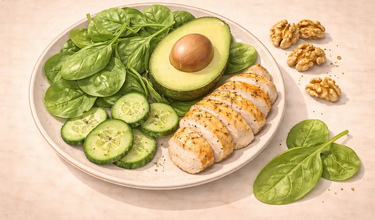
A low-carb diet is one of the most popular ways to lose weight, but the first few weeks can feel like a rollercoaster. From shifting energy levels to ...
 Low-Carb
January 27, 2026
Low-Carb Without the Crazy
Table of Contents
For a long time I thought the only way to “prove” I was serious about weight loss was to go Low-Carb.
Bread? Evil.
Fruit? Suspicious.
Pasta? Don’t even say the word.
And yes, I lost weight a couple of times like that… and then spectacularly face-planted into a pile of muffins because my brain hates lifelong carb exile.
So let’s talk about Low-Carb like adults.
No demonising, no worshipping. Just: what it is, when it helps, when it backfires, and how to do it without wrecking your sanity.
What people think Low-Carb is
The usual image:
-
zero bread, zero pasta, zero rice
-
only salad, chicken and maybe some sad cheese
-
20 g of carbs a day forever
-
“if you eat a banana you’ve ruined everything”
That’s closer to keto cosplay than to a realistic Low-Carb pattern.
For most people, that version is:
-
too restrictive,
-
socially awkward,
-
and impossible to keep once life gets stressful again.
So they swing:
all the carbs → no carbs → all the carbs again
…then blame their “broken metabolism”.
The problem usually isn’t carbs.
The problem is extremes.
What Low-Carb actually is
Let’s strip it down.
Low-Carb = an eating pattern where carbs are reduced compared to your usual diet, especially refined ones, and protein + fats + vegetables move to the center of the plate.
Different versions exist:
-
Very Low-Carb / Keto: ~20–50 g carbs per day, lots of fat, very strict about bread, grains, sugar, most fruit.
-
Moderate Low-Carb: ~75–130 g carbs per day, still allows fruit, some grains and legumes, but in smaller portions.
-
“Lower carb than my usual chaos”: no numbers, just less bread/pasta/sweets, more protein and veggies.
You don’t have to live on butter coffee to say “I eat Low-Carb”.
You don’t even have to count grams, unless you like that kind of thing.
What matters is the pattern:
-
fewer refined carbs and sugars;
-
more protein, fibre, healthy fats;
-
carbs mostly coming from whole foods (veggies, fruit, some grains, beans, dairy).
Why Low-Carb can work for some people
Notice the “can”. Not “must”.
1. Appetite often calms down
Higher protein + more fat + fewer blood-sugar rollercoasters = many people naturally eat less without counting every crumb.
You feel full longer.
You don’t crash as hard at 4 p.m.
You can walk past the office biscuits without hearing them whisper your name.
2. Blood sugar gets less dramatic
For people with insulin resistance, prediabetes or PCOS, reducing refined carbs and pairing carbs with protein can:
-
smooth out spikes and crashes;
-
reduce “hangry” episodes;
-
improve lab numbers over time (when combined with movement and overall energy balance).
3. It cuts out a lot of ultra-processed junk by default
When you stop building meals around:
-
white bread,
-
sugary drinks,
-
sweets “just because it’s Tuesday”,
you automatically reduce a chunk of the hyper-palatable, easy-to-overeat stuff.
Sometimes it’s not the carb grams that help, it’s the food environment change.
Where Low-Carb goes wrong
Let’s be real. There are some classic traps.
Trap 1. Turning carb reduction into carb phobia
Suddenly:
-
fruit is “sugar bombs”,
-
carrots are “too high carb”,
-
a spoon of rice = failure.
You end up living on meat, cheese and oil, with the fibre intake of a small rock.
Result?
Constipation, fatigue, weird breath, social isolation, binge episodes when you finally snap.
Carbs are not villains.
We’re just trying to choose them more consciously.
Trap 2. Swapping one type of junk for another
Low-Carb, done badly, can look like:
-
processed “keto” bars,
-
sugar-free candies,
-
low-carb cookies,
-
enormous amounts of bacon and sausages.
Is it technically Low-Carb? Sure.
Is it kind to your heart, gut and long-term health? Not really.
Whole foods still matter more than the macro label.
Trap 3. Making it an identity instead of a tool
If your brain goes:
“I’m a Low-Carb person now. I can never eat X again.”
…you’re building a psychological prison.
One bowl of pasta or a piece of birthday cake can then trigger:
“I broke the rules, so I might as well go all in.”
That all-or-nothing swing often does more damage than the carbs themselves.
The SashaHealthy Low-Carb framework
If you want to play with Low-Carb without losing your mind, here’s the calmer version.
1. Start with your plate, not with numbers
Forget calculating grams for a moment.
Use this Low-Carb plate template:
-
½ plate: non-starchy veggies
(salad, broccoli, peppers, tomatoes, zucchini, cabbage, etc.) -
¼ plate: protein
(fish, chicken, eggs, tofu, tempeh, beans, Greek yogurt, cottage cheese) -
¼ plate: carbs or extra veggies
(potatoes, brown rice, quinoa, wholegrain bread, fruit, beans)
Add a drizzle of healthy fat (olive oil, avocado, nuts, seeds).
That already lowers carbs compared to the usual “half pasta, half sauce” situation.
2. Cut carbs where they do you no favours
Good places to gently reduce:
-
sugary drinks and juices;
-
pastries, sweets, random biscuits;
-
white bread with zero protein or veg around it;
-
“snack carbs” you eat standing up and barely notice.
You don’t lose anything vital by trimming here.
3. Keep carbs where they help
Places I would keep or moderate, not erase:
-
fruit (especially berries, citrus, apples, pears);
-
a bit of wholegrain with meals;
-
legumes (lentils, beans, chickpeas);
-
carbs around workouts if you train hard.
These bring fibre, micronutrients, and quality of life.
4. Make protein your new default
Every meal:
“Where is my protein?”
Because once protein is in place, it’s much easier to eat fewer carbs without feeling punished.
You don’t need protein powders to do this (they’re optional).
You need habits like:
-
Greek yogurt instead of sugary yogurt;
-
adding beans to soups and salads;
-
choosing tofu, eggs or fish as the hero of the plate.
Who Low-Carb might be good for
Low-Carb can be a useful tool if you:
-
have insulin resistance, prediabetes, PCOS (with medical supervision);
-
naturally love savoury, protein-heavy foods;
-
feel constantly on the blood-sugar rollercoaster with your current diet;
-
want a simple rule like “less bread/pasta/sugar, more protein and veg” to calm chaos.
It doesn’t need to be forever.
Some people use a more focused Low-Carb phase, then move into a Mediterranean-style pattern that’s slightly higher in carbs but still balanced.
Who should be careful with Low-Carb
Not every tool is for every job.
Be extra cautious if you:
-
have a history of eating disorders or strong restriction–binge cycles;
-
use intense training (endurance sports, heavy lifting) several times a week;
-
are pregnant, breastfeeding, or have specific medical conditions (kidney disease, certain hormonal issues).
In these cases, changing carbs should be a joint project with your doctor or dietitian, not with Instagram.
And honestly, if Low-Carb makes you obsessed with food, constantly thinking about bread, or terrified of eating out — that’s a sign it’s not working for you, even if the scale moves.
Your mental health counts too.
Can you lose weight without going Low-Carb?
Absolutely.
Fat loss still comes down to overall energy balance over time.
Low-Carb is just one of many ways to make “eat a bit less than you burn” easier:
-
Some people do better with Low-Carb.
-
Some do better with higher-carb, lower-fat.
-
Many do best somewhere in the middle, focused on whole foods and enough protein.
There’s no moral medal for picking the hardest version.
The question is not “Is Low-Carb the best?”
It’s “Does Low-Carb make my life easier or harder right now?”
If it makes it easier to:
-
control appetite,
-
feel good in workouts,
-
and socialise without panic,
great, we use it.
If not, we adjust.
The SashaHealthy bottom line
Low-Carb is a tool, not a religion.
Used gently, it can:
-
stabilise hunger,
-
support blood sugar,
-
nudge you away from ultra-processed junk.
Used rigidly, it can:
-
damage your relationship with food,
-
trigger binges,
-
make you fear perfectly normal things like fruit and oats.
You’re allowed to experiment.
You’re also allowed to say, “This isn’t for me,” and go back to a more moderate plate without feeling like you’ve “failed”.
Your worth is not measured in grams of carbs.
Science-backed. Human-proven.
Carb-respectful.