
 Nutrition
  Diet Plans
  Fitness
  Psychology
  Science Explained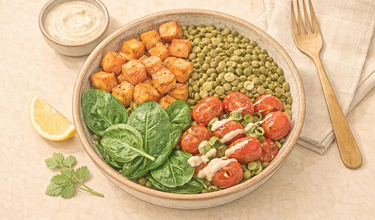
Vegetarian meals should never feel like punishment. This bowl is built around a powerful combination of plant protein, fiber, and volume to keep you w...
 Vegetarian
March 23, 2026
Vegetarian Protein Sources That Actually Keep You Full
Table of Contents
One of the most common concerns about vegetarian meals is protein.
Many people assume that meals without meat cannot be satisfying enough, especially during weight loss. As a result, vegetarian dishes sometimes end up built mostly around carbohydrates, which can leave people feeling hungry again shortly after eating.
The key is understanding where plant-based protein comes from and how to combine ingredients so that meals remain balanced, filling, and nutritionally complete.
Vegetarian meals can absolutely support fat loss when protein, fiber, and volume are included.
Why Protein Still Matters in Vegetarian Meals
Protein supports satiety and helps preserve lean muscle during weight loss.
Meals that lack protein often digest quickly, which can lead to hunger returning sooner than expected. This is why vegetarian meals built only around pasta, bread, or refined grains may not feel satisfying.
Adding plant-based protein sources helps slow digestion and creates more stable energy levels.
Fortunately, there are many vegetarian foods that provide meaningful amounts of protein.
Lentils
Lentils are one of the most practical vegetarian protein sources.
They are affordable, versatile, and naturally rich in both protein and fiber. Because they absorb flavors easily, they work well in soups, stews, salads, and grain bowls.
A lentil-based dish can provide both fullness and stable energy, making it ideal for lunches and dinners.
Chickpeas
Chickpeas are another staple in vegetarian cooking.
They provide moderate protein along with fiber, which helps increase satiety. Chickpeas can be used in salads, roasted as a crunchy topping, or blended into spreads such as hummus.
Roasted chickpeas also make a convenient snack that supports protein intake throughout the day.
Tofu
Tofu is one of the most protein-rich plant foods available.
Made from soybeans, it contains complete protein and works well in many savory dishes. Because tofu absorbs sauces and seasonings easily, it can be grilled, baked, sautéed, or added to stir-fries.
Firm tofu provides a texture that works well as a replacement for meat in many recipes.
Greek Yogurt and Dairy Options
For those who include dairy in their vegetarian diet, foods like Greek yogurt, cottage cheese, and certain cheeses provide substantial protein.
Greek yogurt in particular is versatile. It can be used in breakfasts, sauces, dressings, or even savory bowls.
These foods can make it easier to reach protein targets without complicated cooking.
Eggs
Eggs are one of the most efficient vegetarian protein sources.
They are quick to prepare, affordable, and nutritionally dense. Eggs can be included in breakfasts, grain bowls, salads, or vegetable-based dishes.
When combined with vegetables and whole grains, they create balanced meals that support fullness.
Combining Plant Proteins
Many plant-based proteins work especially well when combined.
For example:
-
beans and rice
-
lentils and whole grains
-
chickpeas and quinoa
These combinations provide both protein and fiber while creating meals that feel substantial and satisfying.
Adding vegetables and healthy fats further improves satiety.
The SashaHealthy Perspective
Vegetarian meals can absolutely support fat loss and long-term health.
The key is building meals where protein and fiber are clearly present. Lentils, beans, tofu, eggs, and dairy foods all provide reliable sources of protein that help keep meals satisfying.
When vegetarian meals are balanced properly, they can feel just as filling and nourishing as meals that include meat.
Science-backed. Human-proven.